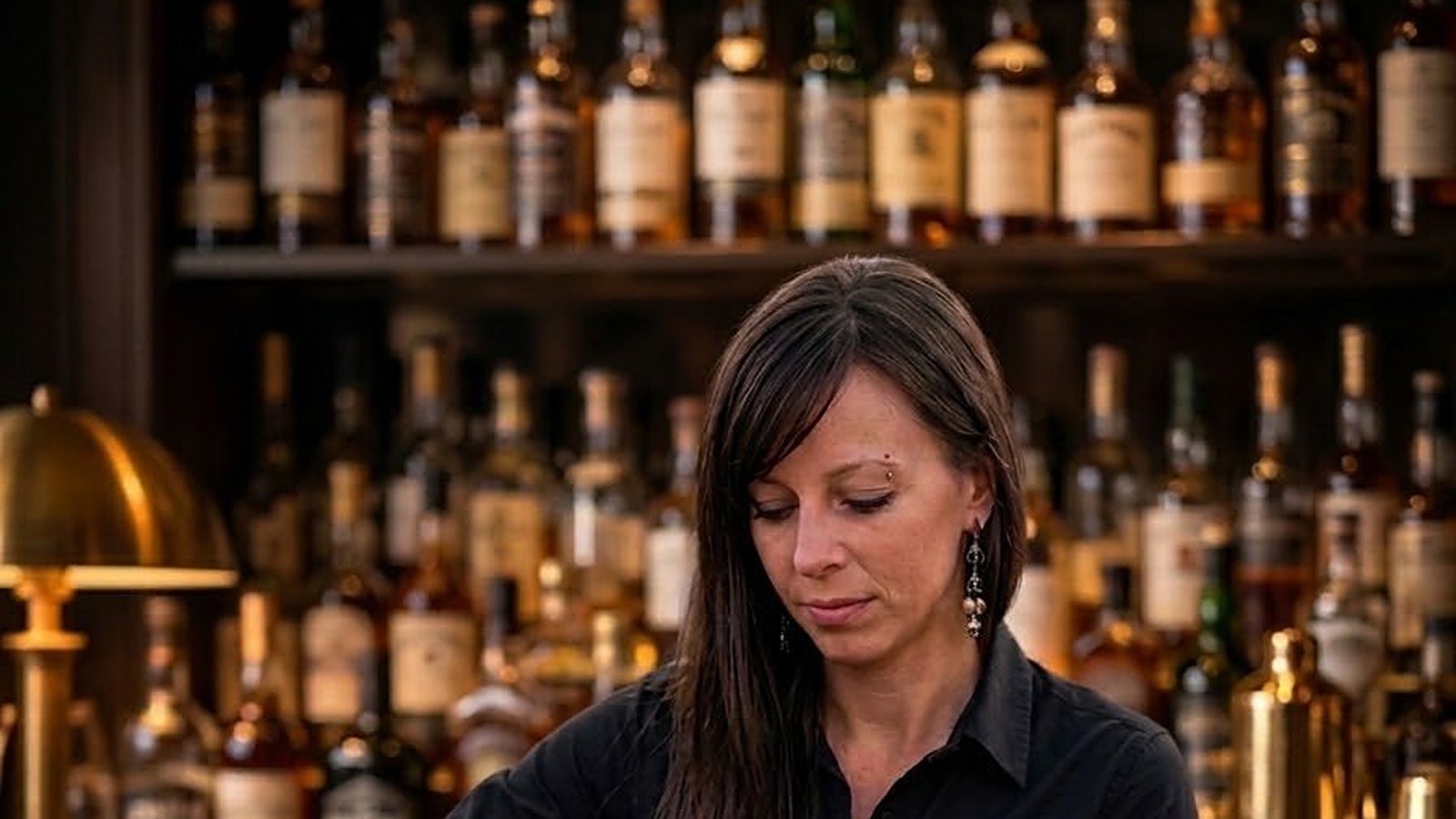
If there’s one question that keeps my couples up at night, it’s this one. Buy too little and the bar runs dry during the first dance. Buy too much and you’re storing cases in the garage until Christmas.
I’m Trisha, founder of The Social Pour, a mobile bartending service here in the Oklahoma City metro. Because we work dry-hire, our clients buy their own alcohol — which means I run this math with real couples, for real Oklahoma weddings, all the time. Here’s exactly how we do it, step by step, with the same numbers our free wedding alcohol calculator uses. Run your own guest count through it as you read and you’ll finish this post with a shopping list, not a guess.
The quick answer
For an average crowd, plan on:
- 1 drink per drinking guest, per hour — with 2 drinks in the first hour, when everyone arrives thirsty. That first-hour extra is your built-in buffer.
- About 85% of your guests will actually drink alcohol. The rest are kids, drivers, pregnant guests, and folks who just prefer sweet tea. Counting every single guest as a drinker is the #1 reason couples over-buy.
- Then split the drinks between liquor, beer, and wine based on your crowd (we’ll get to that below).
For 100 guests at a 4-hour reception, average crowd, that works out to 425 drinks total: about 13 bottles of spirits, 5 cases of beer, and 22 bottles of wine, plus 8 bags of ice. At the Oklahoma retail prices our calculator uses (checked in October 2026), that’s roughly $627 for the alcohol — compared to about $3,825 if a venue sold those same 425 drinks at $9 each. That gap is the whole reason dry-hire exists.
Step 1: Start with your drinking guest count
Your RSVP list is 100. Your drinking list is not.
Take your guest count and multiply by the share who drink — 85% is our standard starting point. Lower it to 70–75% for a family-heavy, Sunday-afternoon, or church crowd. Push it toward 95% for a younger party crowd where you know almost everyone enjoys a drink.
100 guests × 85% = 85 drinking guests. Every number after this builds on the 85, not the 100.
Step 2: Multiply by hours — and the first hour counts double
Guests hit the bar hardest when they first arrive. So the formula is:
Drinking guests × (2 drinks in the first hour + 1 drink for every hour after)
- 4-hour bar: 85 × 5 drinks = 425 drinks
- 5-hour bar: 85 × 6 drinks = 510 drinks
Notice what we do not do: add a big flat “buffer” on top of that. You’ve probably seen a formula online that adds 2 extra drinks per guest just in case. We checked that math — for most crowds it’s really heavy-drinker math wearing a costume. It protects you from running out, sure, but it can also have a light crowd over-buying by more than half. The first-hour double already builds your safety margin in. If you’re genuinely worried, buy from a store that accepts returns on unopened bottles (ask about their policy before you buy, and keep your receipt) and let the store be your buffer.
Step 3: Be honest about how your crowd drinks
This is the step most calculators skip, and it’s where the money is. Same 100 guests, same 4 hours, same everything — three very different shopping lists:
| Your crowd | Total drinks | Spirits (750ml) | Beer | Wine (750ml) |
|---|---|---|---|---|
| Light | 319 | 10 bottles | 4 cases | 16 bottles |
| Average | 425 | 13 bottles | 5 cases | 22 bottles |
| Heavy | 574 | 17 bottles | 1 half-barrel keg | 29 bottles |
Light means lots of guests who nurse one glass of wine all night. Heavy means your college friends are reuniting and the dance floor is the plan. Neither one is wrong — but buying the heavy list for a light crowd wastes hundreds of dollars, and buying the light list for a heavy crowd ends the party early. Our alcohol calculator has a Light / Average / Heavy setting for exactly this reason.
Step 4: Split it — liquor, beer & seltzer, or wine?
There’s no single “correct” split, no matter what a viral video tells you. There’s only your crowd. Here are the three mixes we plan with, again for 100 guests over 4 hours at an average pace:
| Drink mix | Spirits (750ml) | Beer & seltzer | Wine (750ml) |
|---|---|---|---|
| Classic Wedding — 50% liquor / 25% beer / 25% wine | 13 bottles | 5 cases | 22 bottles |
| Oklahoma Party — 40% liquor / 40% beer / 20% wine | 10 bottles | 8 cases | 17 bottles |
| Wine-Forward Dinner — 25% liquor / 30% beer / 45% wine | 7 bottles | 1 half-barrel keg | 39 bottles |
A few Oklahoma truths from behind the bar: summer and outdoor weddings drink a lot more beer and seltzer than the classic wedding mix assumes. A seated dinner where wine is poured with the meal pulls wine way up. And if you’re serving two signature cocktails — most of my couples do — liquor becomes the star whether you planned it that way or not. In the calculator’s default example, about 85 of those 213 liquor drinks are signatures.
Beer & wine only? That works beautifully too, and it’s simpler and cheaper. On the same 100-guest example you’d need about 9 cases of beer and 43 bottles of wine — the calculator redistributes the liquor share between beer and wine automatically when you pick that bar style.
Step 5: Convert drinks into bottles
This is where couples get tripped up in the store aisle, so tape this to your fridge:
- 1 bottle of spirits (750ml) = about 17 cocktails at a standard 1.5 oz pour
- 1 bottle of wine (750ml) = about 5 glasses
- 1 bottle of champagne = about 7 toast pours — a toast for 100 guests means about 15 bottles
- 1 half-barrel keg = about 165 pours — but only buy one when it’s actually cheaper than cases for your count. At 106 beers, 5 cases win. At 144 beers, one keg wins. The calculator compares both prices for you instead of just defaulting to a keg.
- Ice: about 1.5 pounds per guest — 150 pounds (eight 20-pound bags) for 100 guests, and about a third more for an outdoor summer event. Keep chilling ice and serving ice separate.
The shopping list by guest count
Here’s the full average-crowd, Classic Wedding starting point for a 4-hour bar:
| Guests | Total drinks | Spirits (750ml) | Beer | Wine (750ml) | Ice |
|---|---|---|---|---|---|
| 50 | 215 | 7 bottles | 3 cases | 11 bottles | 4 bags (80 lbs) |
| 100 | 425 | 13 bottles | 5 cases | 22 bottles | 8 bags (150 lbs) |
| 150 | 640 | 19 bottles | 1 half-barrel keg | 32 bottles | 12 bags (230 lbs) |
And don’t forget the unglamorous heroes: mixers, sodas and juices, cups (plan on roughly 6 per guest across the night — drinks get set down and forgotten), cocktail napkins, lemons and limes, and non-alcoholic drinks and free water for every guest, drinker or not. When you book our mobile bartending services, mixers, ice, cups, napkins and garnishes come off your list entirely — they’re included, and we bring them.
Three mistakes that blow the alcohol budget
- Counting every guest as a heavy drinker. That’s two over-buys stacked on top of each other. Pick your real percentage, then pick your real crowd level — separately.
- Guessing the split instead of knowing your people. A beer crowd with 39 bottles of wine on hand is money sitting in the wrong bottles.
- Forgetting ice, mixers, and the toast. Alcohol is only part of the bar. Running out of ice at hour three is just as much a party-ender as running out of vodka.
Want the exact list for your wedding?
Plug your real numbers into our free wedding alcohol calculator — guest count, hours, how your crowd drinks, and your drink mix — and it will build your shopping list bottle by bottle, with what it should cost here in Oklahoma and what you’d save versus a venue bar.
And if you’d rather hand the whole bar to somebody who runs this math for every event she pours? That’s what we do. Our bar packages start at $1,000, we bring the portable bar, the bartenders, the mixers, the garnishes and the ice — you bring the alcohol and the people you love. A custom signature cocktail created just for your story is $150, and yes, we can talk about edible Story Toppers printed with your story and a color-changing “magic” pour that your guests will still be talking about at brunch.
Great stories are poured, not planned. Tell us about your event or call 405-953-1794 — we’re booking 2027–2028 dates now.
Quick questions, quick answers
How many drinks should I plan per guest at a wedding? About 1 drink per drinking guest per hour, with 2 in the first hour. For an average 4-hour reception that’s about 5 drinks per drinking guest — then adjust down about 25% for a light crowd or up about 35% for a heavy one.
How much alcohol do I need for 100 guests? At an average pace over 4 hours, with about 85% of guests drinking: roughly 425 drinks — about 13 bottles of spirits, 5 cases of beer, and 22 bottles of wine on a classic mix, plus about 150 pounds of ice.
What if half my guests don’t drink? Then your drinking percentage does the work. Drop the “guests who drink” number in the calculator toward 50–60% and the whole list shrinks with it — just don’t shrink the water, soda, and non-alcoholic options. Everybody deserves something good in their glass.
Should I buy a keg or cases? Whichever is cheaper at your count. A half-barrel keg pours about 165 beers; up to about 120 beers, cases are usually the better buy and give you more variety, and past that a keg often wins — until the count climbs enough that cases win again. The calculator prices both at your exact count and flags the cheaper one.
Who buys the alcohol for a dry-hire bar? You do — that’s what dry-hire means, and it’s why your guests drink free with no venue markup. We send you the exact shopping list, you keep the receipts in your name, and we handle everything else. I explain the whole model in What Is Dry-Hire Bartending? and our bartending FAQs.